
FMCSR California Adoption and Truck Liability Explained

FMCSR California adoption truck liability begins with one consequential fact: California does not run a separate scheme of commercial trucking safety rules. The state incorporates the Federal Motor Carrier Safety Regulations for intrastate carriers, so a federal compliance violation becomes evidence of a state law negligence violation. This page explains how that incorporation works and which parts of the federal code decide serious trucking cases.

390-399

Title 49 CFR parts California incorporates for intrastate carriers

Sec. 669

Evidence Code section behind negligence per se in a trucking case

FMCSR California adoption truck liability negligence per se causation jury instruction diagram

FMCSR California Adoption Truck Liability and the Federal Structure

The Federal Motor Carrier Safety Regulations occupy Parts 390 through 399 of Title 49 of the Code of Federal Regulations, and each part governs a distinct area of trucking safety. Part 390 defines who counts as a motor carrier, a driver, and a commercial motor vehicle. Part 391 governs driver qualifications and the driver qualification file. Part 392 sets driving rules, including prohibitions on driving while fatigued or impaired. Part 395 sets the hours-of-service limits. Part 396 requires systematic inspection, repair, and maintenance. Together these parts govern nearly every operational decision a carrier and its drivers make.

How California Adopts the Federal Scheme

California does not leave a gap for intrastate operations. California Vehicle Code section 34500 directs the California Highway Patrol to adopt regulations for the safe operation of motor carriers, and the CHP has done so through Title 13 of the California Code of Regulations, section 1200 and following. Those regulations incorporate the FMCSR by reference for intrastate motor carriers, with limited state-specific modifications. Whether a truck runs an interstate route regulated by the Federal Motor Carrier Safety Administration or an intrastate route regulated by the CHP, the same substantive safety rules apply in nearly every material respect. California courts therefore treat an FMCSR violation the same as a violation of any other state safety regulation for tort purposes.

Negligence Per Se and the Violations That Matter Most

The negligence per se doctrine

Evidence Code section 669 provides that failing to comply with a safety regulation designed to protect against the harm that occurred, involving the class of persons the rule protects, creates a presumption of negligence. A driver who exceeded the 11-hour driving limit under Part 395 before a crash may face that presumption, shifting the practical burden to the defense to rebut it.

The violations that move a case

Hours-of-service violations in electronic logging device data, driver qualification file gaps, maintenance violations tied to the mechanical cause, missing pre-trip and post-trip inspections, and drug and alcohol testing failures carry the most weight. Each category generates a discoverable paper trail retained under specific federal recordkeeping periods.

Causation still has to be proven

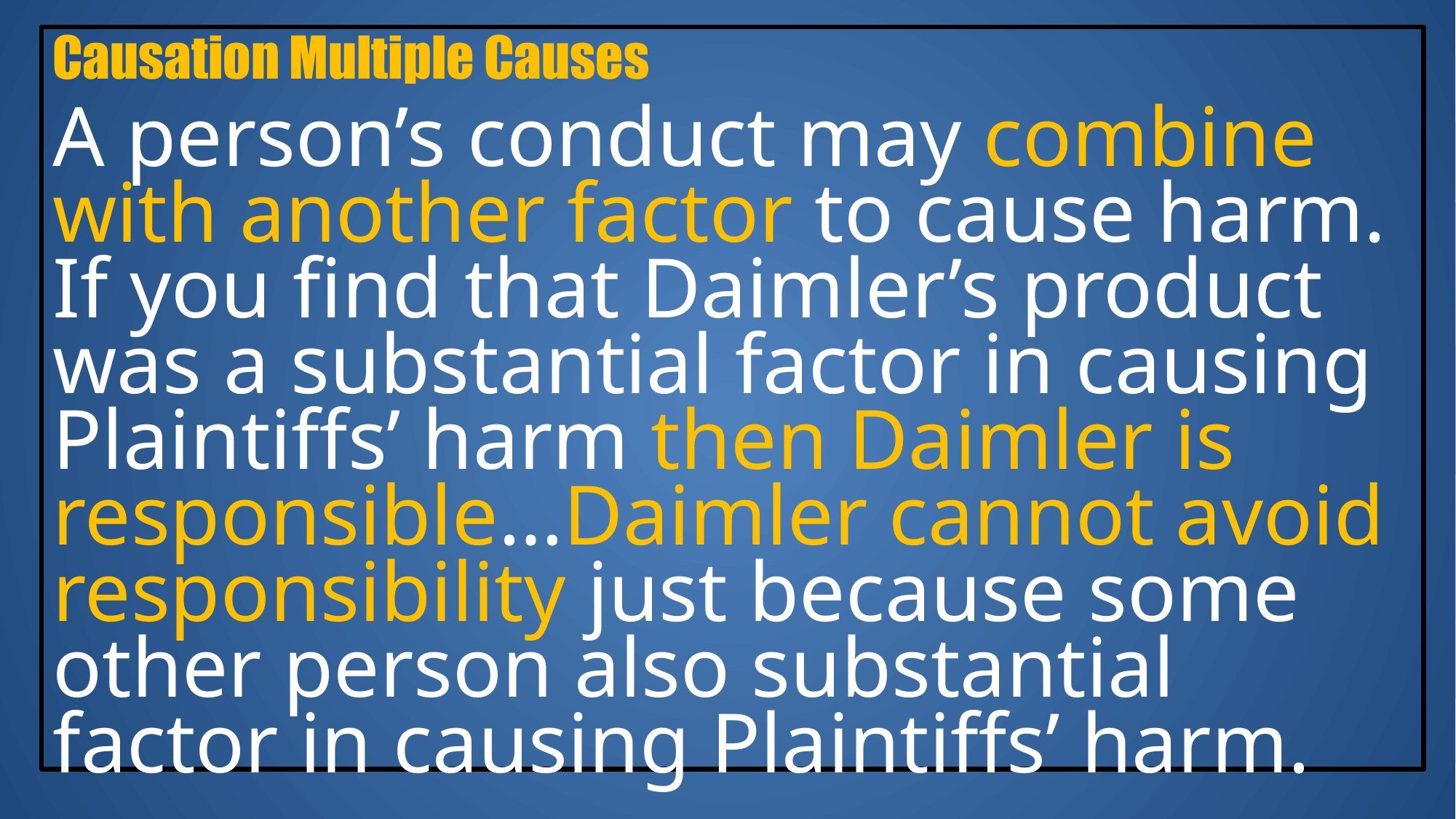
California law requires the plaintiff to show the violation was a substantial factor in causing the harm, not merely that it existed. This is why trucking cases invest in accident reconstruction and human factors experts who connect a specific regulatory failure, such as fatigue from an hours-of-service violation, to the mechanism of the crash.

Building the Regulatory Case

Counsel typically plead both a general negligence theory and a negligence per se theory tied to specific FMCSR violations, so the case survives even if one violation cannot be conclusively proven.

Theory pleaded
Jury finding
Adoption route
Vehicle Code 34500 and 13 CCR 1200 incorporate the FMCSR for intrastate carriers
Legal effect
An FMCSR violation can support a negligence per se presumption
Proof required
The violation must be a substantial factor in the crash
Best evidence
ELD data, driver qualification files, and maintenance records

Keep Reading

Identifying the specific regulatory violations early lets counsel tailor document requests, deposition topics, and expert retention to build a negligence per se case rather than a general reasonableness argument the jury must weigh without a statutory anchor.

Back to Case Studies

Referring a California trucking case?

We handle serious trucking and product liability cases as counsel or co-counsel and pay statutory referral fees.

Refer a case

Frequently Asked Questions

What is the FMCSR?

The FMCSR, or Federal Motor Carrier Safety Regulations, is the federal safety code found at 49 CFR Parts 390 through 399 that governs commercial trucking operations including driver qualification, hours of service, and vehicle maintenance.

Does California have its own separate trucking safety rules?

Not entirely. California incorporates the FMCSR by reference for intrastate carriers through Vehicle Code section 34500 and 13 CCR 1200 and following, with limited state-specific additions, rather than maintaining a wholly independent regulatory scheme.

What is negligence per se in a trucking case?

Negligence per se is a legal doctrine that presumes negligence when a party violates a safety statute or regulation designed to prevent the type of harm that occurred. An FMCSR violation, once proven, can support this presumption in a California trucking case.

Skip to content