

A narrative guide to asking the right questions at deposition and trial
““Lesson here… You come at the king, you best not miss.” — Omar, HBO’s “The Wire”
““If the world should blow itself up, the last audible voice would be that of an expert saying it can’t be done.” — Peter Ustinov (1921 – 2004)
What is a defense “expert”? To the inexperienced or unenlightened lawyer, the thought of cross-examining the other side’s “expert” may conjure up fear and doubt. In reality, experts are of varying professional quality and temperament: they can be very good, or they can be mediocre, maniacs, shoddy, BS artists, money-hungry vultures, myopic, arrogant, angry, condescending, unprepared, and the list goes on and on and on.
The point is that cross-examining experts is really not any different than with a lay witness. In fact, I find it easier.
Preparation Topics
Expert Deposition Notice And Trial Subpoena
Prepare and serve a detailed deposition notice for expert witnesses. (See Exhibit A, on page 47) This notice covers all the bases. It asks for all the key materials and has proper notice of your intent to video tape the deposition. The materials requested are key, even if they don’t appear to be. Asking an expert to produce financial records is important because even if they don’t produce them at deposition, when you later do a motion to compel, you have a basis for your motion.
Asking an expert to produce all documents establishing the foundation for any scientific technique or method they are relying on is critical. Of course, they never produce it at deposition or at trial. Then, when you ask for an Evidence Code section 402 hearing to challenge the admissibility of the testimony, the expert does not have the materials to establish: 1) the reliability of the technique/ method; (2) that the expert is qualified to give an opinion on the subject; (3) the correct scientific procedures were used and (4) the scientific technique/ method is sufficiently established to have gained general acceptance in the relevant scientific community. Testimony excluded!
Take your deposition notice and convert it to a trial subpoena and serve it on the expert at deposition. Tell the expert that he/she is expected to bring their entire file to trial pursuant to the subpoena.
Videotape
All important expert depositions must be videotaped! Why? Because you are allowed to play portions of the expert’s videotaped deposition testimony at trial, during your case in chief and even though the expert is not actually on the stand.
I cannot tell you how many times I have flipped defense experts at deposition to testify favorably for plaintiff, but the defendant later decides not to call that expert. If you did not videotape the deposition, then you would need to call the expert live at trial and he or she will have more wiggle room. If you did videotape, then you give notice of the portions you plan on playing, the judge rules on any objections and then it’s “play away.”
Some judges do not know you can do this, so use “Exhibit B” (see page 47) to prepare your brief detailing the law on this matter. Also attached is a sample form of the notice of page/line numbers you have to provide.
Research The Expert
Google the expert. Look at the expert designation to see what areas they have been designated on. Look at their Web site. Look at their CV and pull all the articles. Look at and order their publications. Look at what organizations of which they are members and see what materials or positions they have on the topics in your case.
For one notorious blowhard defense expert, his resume contains pages and pages of all the various schools he attended and organizations he is a member of. Subpoena those records. I did. I served over 10 trial subpoenas for all these records. Why? To see if the expert was lying on his resume or overstating anything. One little tidbit can become a centerpiece for cross at trial.
Determine in what areas they are really an “expert.” Many times the expert has no real experience in the area they are covering. Go to trialsmith.com and pull every single deposition that expert has given, especially where they have testified for plaintiff. The CAALA ListServe is an invaluable source for information and depositions regarding experts. I really cannot emphasize how critical it is to thoroughly research an expert before deposing them. Defense experts can be impeached with pretty much anything you uncover; contradictory materials on their Web sites, their own books, prior deposition or trial testimony, articles, financial relationships, etc.
Trust me, experts can be like dominoes. Once you impeach or effectively cross them on one or more issue, they know….you know….and many times they “give it up” much easier.
Outline The Legal Issues
Go to the CACI instructions covering liability, damages and defenses. Try to frame your questions using the words in the instructions. While expert depositions are frequently about determining what an expert is going to say, more times it’s about getting them to concede issues the jury is going to determine.
Understand The Science Or Topic
It’s 2017. You can pretty much find a book, treatise or article covering any scientific issue or topic on the Internet through a couple of searches. If it’s an accident reconstruction expert, get the latest or best book that summarizes the topic. If it’s an orthopedic issue, read the Internet. Talk to your own expert. Hire a second expert as a consultant at a lower rate to explain complicated issues to you until you understand them. Do something to understand what the expert is testifying to. I will never take an expert’s depo unless I have mastered the topic. That way an expert can try to evade questions with gobbledygook but I can call them on it and again, let them know that I know.
The Deposition
Admonitions
Of course, go over the number of times they have been deposed before so you can gain their agreement that you don’t need to go over the ground rules. That number can be powerful to establish bias. But, I always tell experts four things:
A.) They can amend, change or add to any previously answered question before the deposition is concluded;
B.) If they don’t change the answer before the deposition is done and instead change it later when they review the transcript, I will tell the jury they changed it. That can be damaging to the expert and the defense;
C.) The best approach for them is to think and take all the time they need before they answer a question;
D.) They can take a break whenever for whatever reason. Why do I do this? Many times you will lock an expert into favorable testimony for the plaintiff and the expert or defense will try to undermine that at trial by claiming they made a mistake or were bullied or confused. These four admonitions undermine any such attempt.
Deposition Notice
Go over the deposition notice and confirm the expert has brought everything requested, what was not brought and why. If they have not brought everything requested, make arrangements for them to produce it immediately (faxed or e-mailed during deposition if possible) and reserve the right to conduct a second session.
The Importance Of Using Self-Contained Questions
Because you are videotaping the deposition, you need to be aware of the need to have self-contained, logical questions and answers. So, if it took four jumbled questions and answers to get a direct answer, ask it again in a complete form. For example, if it took 10 questions to get out the fact the expert’s retention rate is 90 percent for defendants or insurance companies, then ask the question again: “90 percent of the time that you are retained as an expert, it is for defendants or insurance companies, correct?”
Basic Questions For The Depo
If you are going to do a “best of ” testimony of the defense expert for your case in chief, make sure to ask all questions necessary to let the jury know who this person is. Always remember to drill down and get the answer. Follow the who, what, where, how, when and why format to get necessary details.
• Retained By Defense –
“You have been retained by the defense to act as their expert in the area of human factors, correct?”
• Areas Of Expertise –
“You hold yourself out as a human factors’ expert, safety expert and reconstruction expert, correct?”
This is critical as you can use the “Ride the Pony” technique of covering basic or specific areas the expert has to agree with and that the defense attorney did not anticipate you would cover. This also prevents the defense attorney from excluding unfavorable testimony on the grounds that it exceeds the area of the expert’s retention. Lead the expert if necessary by going over the defense expert designation (which is usually overboard.)
• Prior Retentions And Expert Work –
“How many times have you been retained by [this Defendant, this law firm, this defense attorney]?”
“What percentage of your consultant or expert work is for the defense versus injured party? How did you arrive at this figure, from your head or from written materials? Where are those materials?
“What percentage of your time is spent acting as an expert or consultant?”
• When First Retained –
“You were first retained by defendants on January 1, 2011, correct?”
If the expert was retained shortly after the incident, this fact can be used that the defendant first focused on avoiding responsibility rather than making up for the harms caused. If the expert was retained two years before trial, then you can point out how much time the defense and expert had to do whatever they wanted.
• Billings –
“Your firm has billed defendant $85,000 for work performed in this case, correct?”
“You expect to bill another $4,500 for work performed through trial, correct?”
“How much has your firm been paid by the defendant (or insurance company) since you started?”
• General Bias –
“You have never testified that a location was a dangerous condition, correct? You cannot identify one specific case where you testified for an injured party in the last five years, correct?”
• Details As To The Expert’s Assignment On This Case –
“What were you asked to do in this case?”
“Who gave your instructions?”
“When were you asked to do this?”
“Why were you asked to do this?” This is important as many times you can establish the expert was hired and not told directly what to do. They knew what to do. Hurt the plaintiff.
“What did you actually do?” – Have them detail everything they did in order to reach their opinions. Detail each person they spoke with. Follow up with who, what, where, how, when and why. Have them detail everything they reviewed. Follow up with who, what, where, how, when and why.
“Who gave it to you?”
“Detail everything you did.” Follow up with who, what, where, how, when and why.
“Any Limits? Were there any limits placed on what you could do in order to reach your opinions?”
“Any limits on how much you could bill?”
“Anything you wanted the defendant to do or get that was not done?
“Any depositions you asked be taken?” Follow up each with who, what, where, how, when and why.
• Ask For And Get Everything?
“Did you ask defendant to give you all materials for this case (depositions, discovery, etc.)?”
“You did this because many times an opinion can change based on one fact or different testimony, correct?”
It’s easy to establish that an expert who was not provided key evidence or deposition testimony is just a hired gun and a biased witness.
• Opinions And Basis For Opinions?
“What are each of your opinions?”
“What is the basis for each opinion?”
Yes, these are the critical questions and no, don’t let the expert wiggle out of answering it with nonsense like, “I don’t know what I am going to be asked?” To that, I respond with “Whatever opinions you don’t disclose will be prohibited at trial” and “The purpose of this deposition is to find out what your opinions are.”
• Any Other Opinions?
You must conclude your deposition with this catch-all. Do it twice, if necessary.
“We have now covered all of your opinions, correct? You have no other opinions other than those you have disclosed today, correct?” This area is critical because you can then move to preclude the expert from stating new opinions at trial.
• Any Other Work Planned?
“What other work do you plan on doing between now and the time of trial?” Follow up with who, what, where, how, when and why.
• Criticisms Of Or Rebuttal To Plaintiff ’S Experts?
“Do you have any criticisms of plaintiff’s experts? Do you have any rebuttal opinions to those of Plaintiff ’s experts?” Follow up with who, what, where, how, when and why.
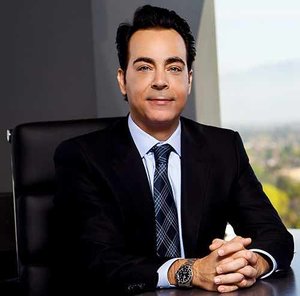
Arash Homampour is a trial attorney who represents individuals in catastrophic injury/wrongful death matters, employment, and insurance bad-faith cases. In 2016, he was named one of the top 30 Plaintiff attorneys in the State of California and, in 2007, he was named one of the Top 20 Attorneys Under the Age of 40 both by the Los Angeles Daily Journal. Every year since 2004, he has received nominations for Trial Attorney of the Year by the Consumer Attorneys of California and/or the Consumer Attorneys Association of Los Angeles. He was awarded CAALA’s Trial Attorney of the year award for 2009-2010. Learn more about Arash here.




