
A botched welfare check at a Diamond Resorts hotel produced a verdict exceeding $60 million and a paid judgment exceeding $100 million. If a hotel ignored a family's welfare-check call or sent the wrong person, a hotel welfare check failure lawsuit in California can follow a clear, winnable path.
Refer or co-counsel: (323) 252-7921 · [email protected]
Case at a glance.
O'Malley v. Diamond Resorts Management, Inc., Orange County Superior Court No. 30-2015-00771021 (Hon. Frederick Paul Horn). Jury verdict exceeding $60 million; paid judgment exceeding $100 million after interest; unanimously affirmed on November 7, 2023 (G061459, unpublished). The published prior appeal is O'Malley v. Hospitality Staffing Solutions (2018) 20 Cal.App.5th 21.
What a welfare check is, and where hotels go wrong
When a guest cannot be reached, a family member asks staff to enter the room and confirm the guest is safe. Good practice calls for a trained employee, a real entry and search, verbal contact using the guest's name, documentation, and a 911 call at any sign of distress. When a hotel ignores its own written procedures and a guest dies or suffers brain injury because the delay postponed care, a hotel welfare check failure lawsuit can succeed.
The proof point: O'Malley v. Diamond Resorts
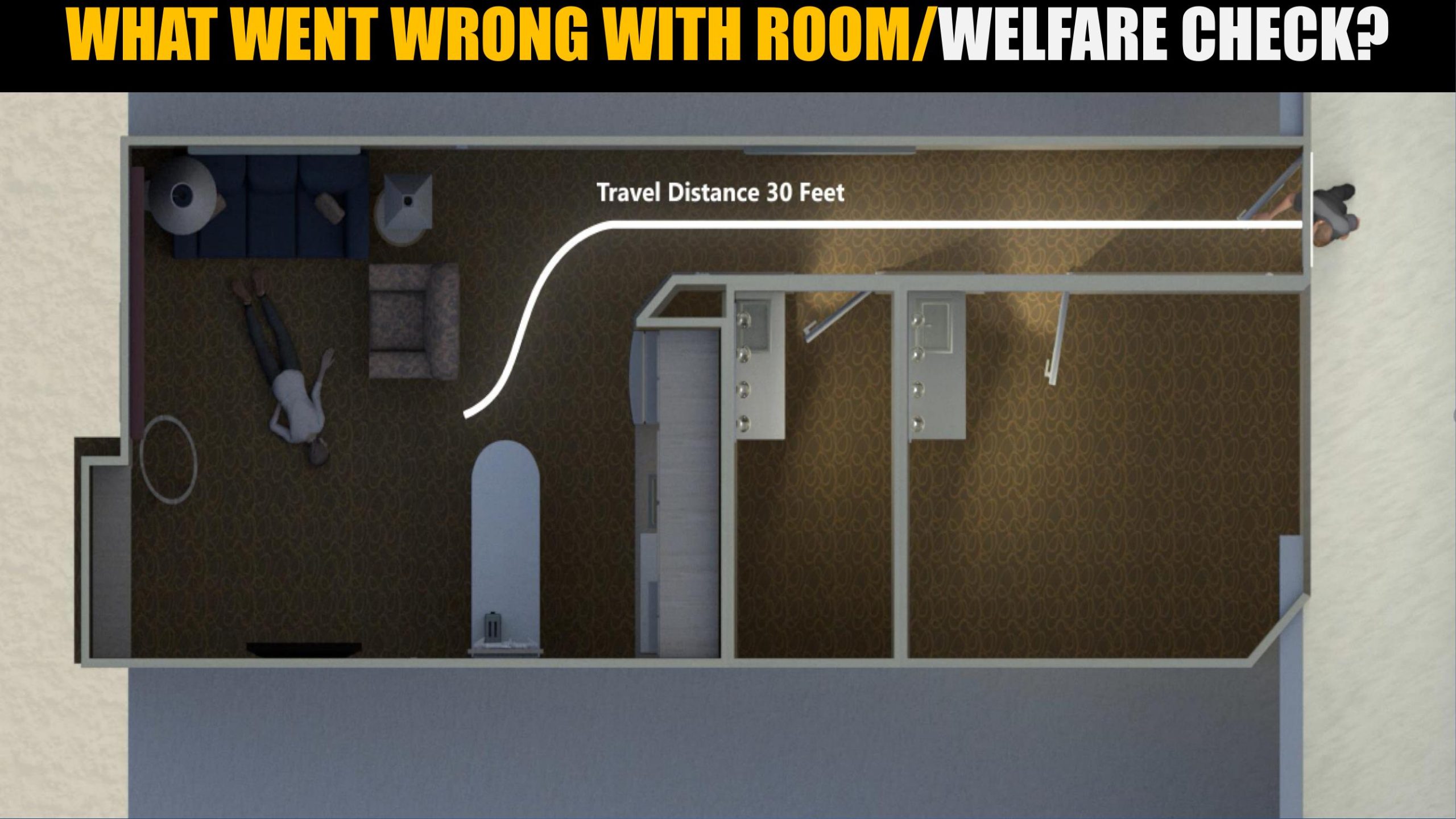
On March 29, 2014, Priscilla O'Malley was alone in room 102 of a Diamond Resorts hotel in Dana Point when her brain aneurysm ruptured at about 6:30 p.m. Michael called the front desk and asked for a welfare check. The hotel sent one untrained worker who opened the door, saw a dark room, never went inside, and reported it empty. Michael found her hours later on the living-room floor. She survived with permanent anterograde amnesia and needs lifelong care. A jury found Diamond liable, and the Court of Appeal affirmed in 2023.
The room diagram made the case. A worker who actually entered would have found her. Every welfare-check case turns on one question: did staff walk the room, or stand at the door and call it empty?
The two legal theories that won
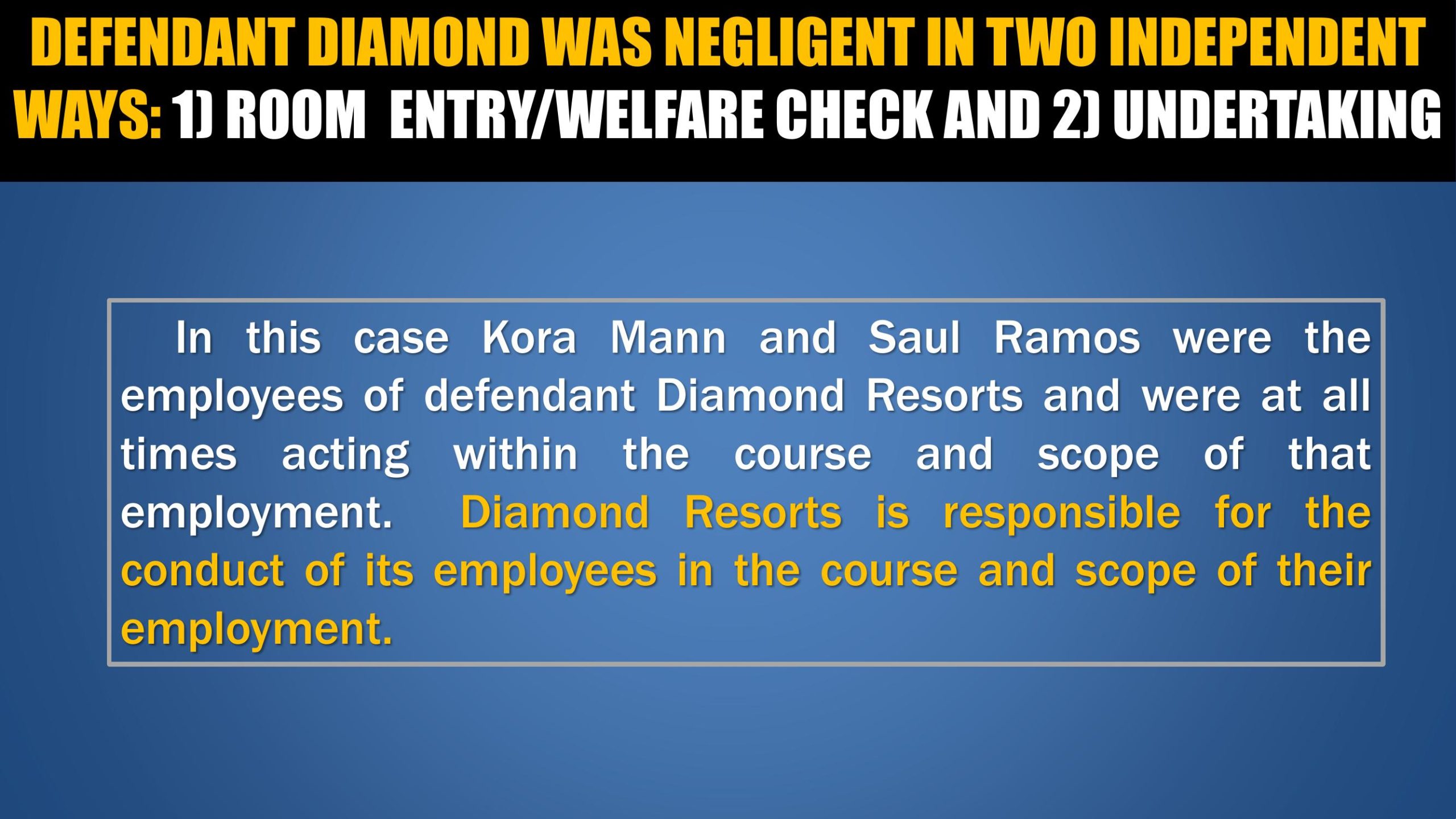
Negligent welfare check. The hotel had written room-entry procedures and ignored them, which is evidence of negligence. The trial court admitted the procedures, and the Court of Appeal upheld that ruling.
Negligent undertaking. By accepting the call and dispatching staff, the hotel undertook the duty to perform the check competently. See Paz v. State of California (2000) 22 Cal.4th 550 and Restatement (Second) of Torts section 324A. Diamond's argument that the husband became the undertaker by calling did not succeed. For briefing, rely on the published prior appeal O'Malley v. Hospitality Staffing Solutions (2018) 20 Cal.App.5th 21, along with Paz and Delgado v. Trax Bar & Grill (2005) 36 Cal.4th 224, not the unpublished 2023 affirmance.
The burden of proof, not certainty
The standard is preponderance of the evidence, "more likely true than not," not certainty and not medical certainty. The plaintiff must show only that, more likely than not, the hotel's negligence was a substantial factor in the harm. In O'Malley the defense had no medical expert to refute causation, and the Court of Appeal rejected Diamond's challenge.
Why hours matter
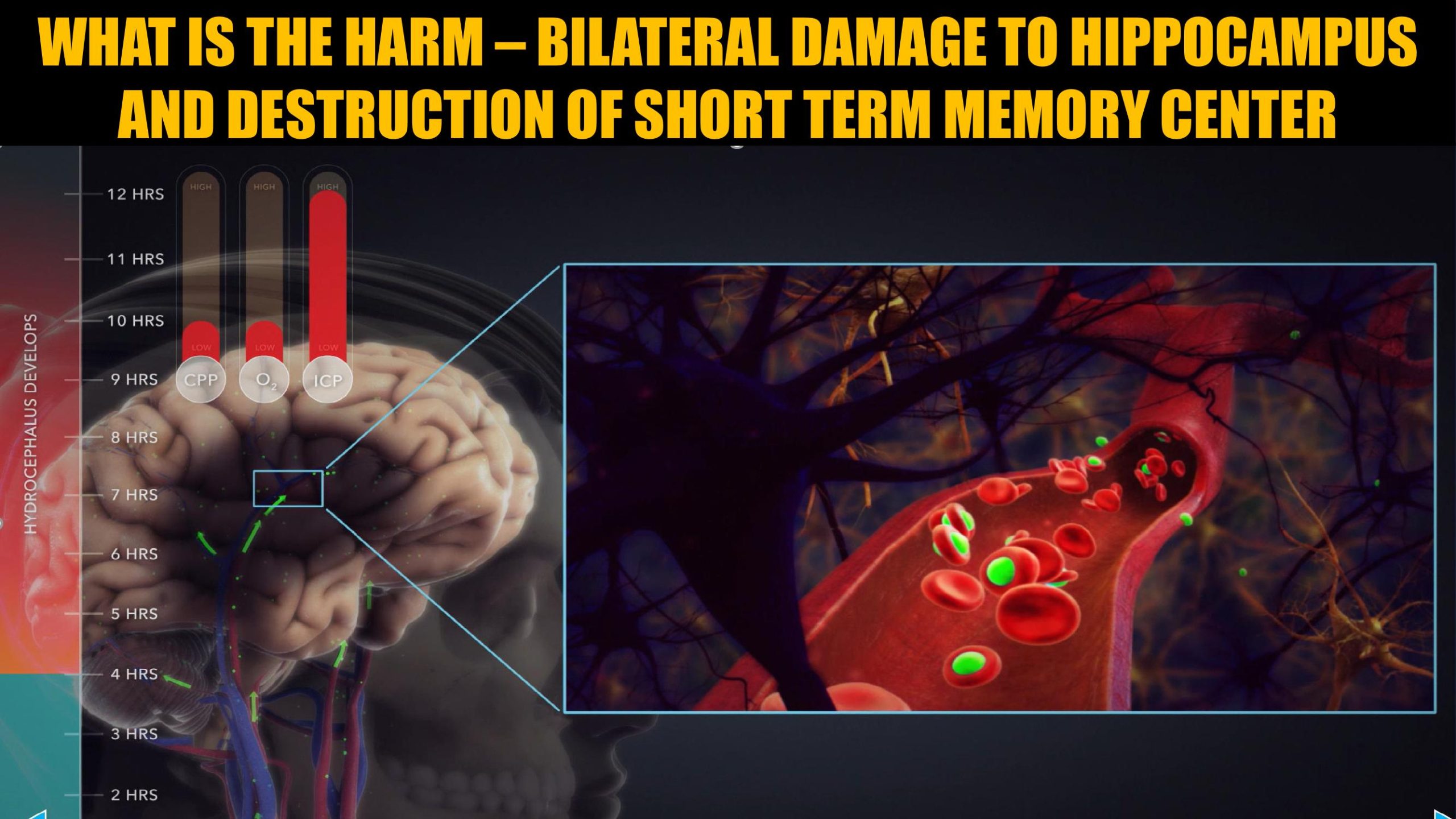
In aneurysmal subarachnoid hemorrhage, acute hydrocephalus develops in the early hours and is treatable. Early intervention changes outcomes. Priscilla presented with hydrocephalus and needed a surgical drain, but only after the hours of delay. That delay is why these cases produce large verdicts when the framework is built correctly.
The joint-employer issue
Diamond argued the worker belonged to a staffing contractor, Hospitality Staffing Solutions, and not to the hotel. That argument did not prevail. A hotel that exercises operational control over a worker, directing his assignments and on-property duties, can be treated as a joint employer regardless of who issues the W-2. Plead joint employer from the outset, and reach both the operator and the staffing entity in discovery.
Does the case look like O'Malley?
A referral is worth evaluating when a guest could not be reached, someone asked the hotel for a welfare check, the hotel did not perform it or performed it inadequately, the guest was later found in a medical emergency, the delay affected the outcome, and the injury was a brain injury, an anoxic or hypoxic injury, a cardiac event with neurological consequences, or a death.
The first 30 days
Send a litigation-hold letter for the CCTV, incident reports, training files, staffing records, and the welfare-check log. Request the 911 audio, CAD log, and run sheets, and collect the treating-provider records. Take family statements while memory is fresh, and photograph the room. Get the chain's national welfare-check standard, not just the property policy. Surveillance footage is the case-killer if you wait.
Refer or co-counsel
The firm pays a referral fee consistent with California Rule of Professional Conduct 1.5.1, with a written fee-division agreement and the client's written consent. See the O'Malley $100M judgment hub and the related guide to hotel-negligence brain-injury claims.
The Homampour Law Firm, PC · 15303 Ventura Blvd, Suite 1450, Sherman Oaks, CA 91436
Refer or co-counsel: (323) 252-7921 · [email protected] · homampour.com
Refer a welfare-check or hotel-negligence case · Schedule a 20-minute call
Arash Homampour is a Sherman Oaks trial lawyer recognized by Super Lawyers and named by Law360 a Titan of the Plaintiffs Bar, and he has argued before the California Supreme Court.
Frequently asked questions
Can you sue a hotel for failing to perform a welfare check in California?
You may have a claim when the hotel had a duty, typically created by the family's request and the hotel's own procedures, and its failure caused or worsened injury. California recognizes negligent performance of the check and negligent undertaking under Paz v. State of California (2000) 22 Cal.4th 550 and Restatement (Second) of Torts section 324A.
How long do you have to file a hotel-negligence lawsuit in California?
Generally two years from the date of injury under Code of Civil Procedure section 335.1, or two years from the date of death for wrongful death. Tolling for minors or incapacity is narrow and fact-specific, so do not wait.
What if the welfare-check request came from a non-family member?
The negligent-undertaking theory does not depend on who called. A friend, co-worker, neighbor, or employer whose call the hotel accepts and acts on can create the undertaking. The duty runs to the guest, not to the caller.
What if the hotel claims the guest had a do-not-disturb sign up?
A do-not-disturb instruction does not override a welfare-check request from a worried family member, because the request itself signals concern that justifies entry.
Does a family member have a separate claim?
Often, yes. A spouse may have a loss-of-consortium claim independent of the injured guest's recovery. Family members present for the discovery may also have a bystander emotional-distress claim under Thing v. La Chusa (1989) 48 Cal.3d 644.
Past results do not guarantee similar outcomes. Every case is different, and the value of any claim depends on its specific facts. This page is attorney advertising and general information, not legal advice, and it does not create an attorney-client relationship.