Concurrent Third Party Negligence Public Property Claims

Concurrent third party negligence public property claims arise whenever a private party's conduct combines with a defective or dangerous public improvement to cause an injury. Public entity defense counsel like to frame these cases as simple: a driver ran a red light, so the entity that owns the road bears no responsibility. California law rejects that framing. A public entity can be independently liable even when a third party's misconduct is the immediate cause of the collision, provided the dangerous condition of the property was also a substantial factor.

835

Government Code section imposing public entity liability for a dangerous condition

1431.2

Civil Code section (Proposition 51) apportioning non-economic damages by fault

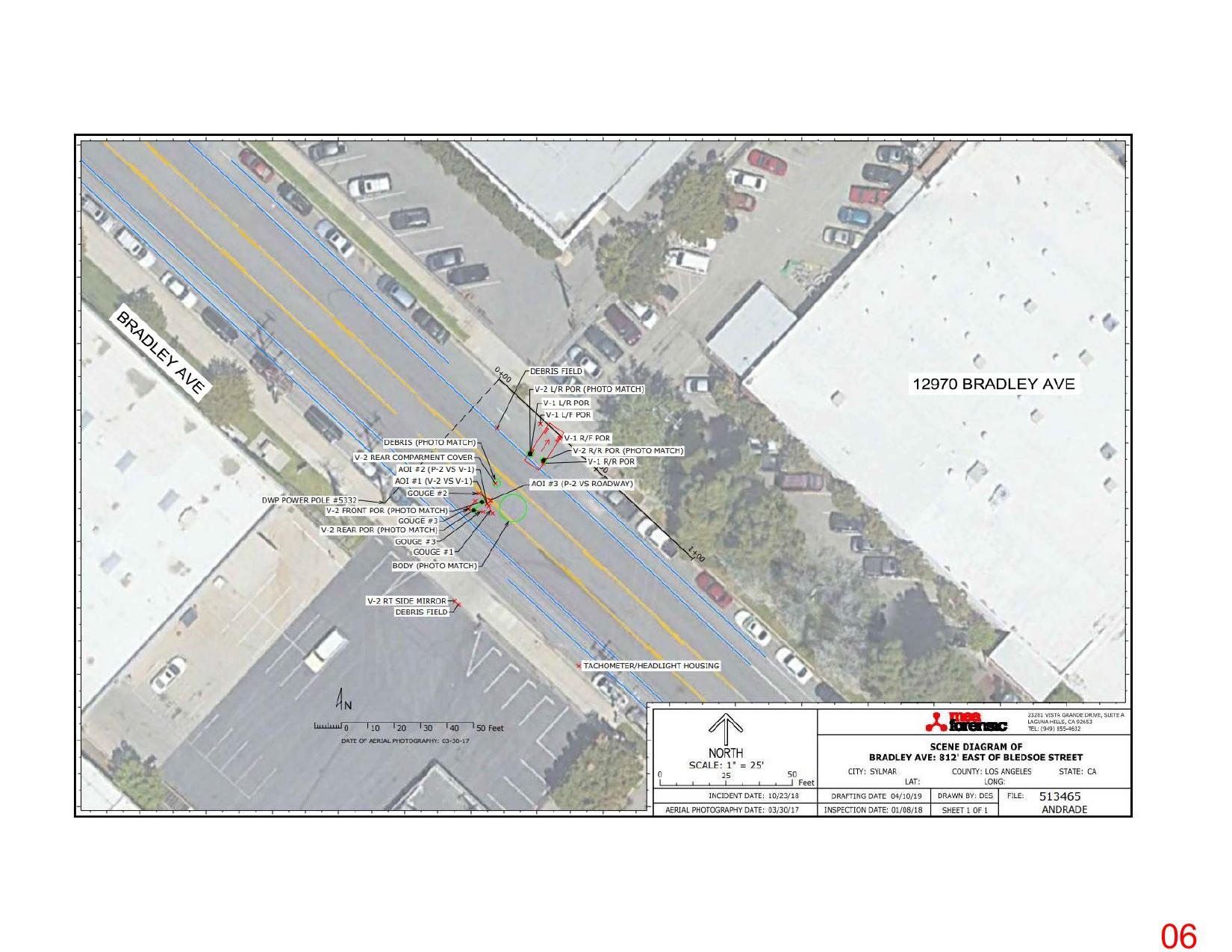
Concurrent third party negligence public property analysis of a California roadway crash location

Why a Third Party's Fault Does Not Erase the Entity's Liability

Government Code section 835 does not require that a dangerous condition be the sole cause of an injury. It requires only that the dangerous condition be a substantial factor in causing the harm, alongside whatever other causes exist. Multiple causes can each be a substantial factor in the same injury, and California law has never treated causation as a zero-sum allocation where only one party can be responsible. A case can and often should proceed against both the negligent driver and the public entity whose road, intersection, guardrail, or median contributed to the occurrence or severity of the harm.

The Controlling Authority: Ducey v. Argo Sales

The seminal case is Ducey v. Argo Sales Co. (1979), where the California Supreme Court held that a public entity could be liable for a dangerous condition of a freeway median that lacked an adequate barrier, even though the immediate cause of the crash was a runaway truck crossing into oncoming traffic. The court reasoned that the absence of a sufficient median barrier was itself a dangerous condition that made the freeway unreasonably risky for that foreseeable crossover accident. The truck driver's negligence did not absolve the state; it was one of two substantial factors. Ducey remains controlling authority for arguing that a failure to design, install, or maintain a barrier or shoulder can support liability even where a third party's negligent driving triggered the specific event.

Building the Dual-Defendant Case

A concurrent negligence case requires the plaintiff to prove two separate things without letting either crowd out the other. Pleading both theories in the same complaint, supported by separate factual allegations for each defendant, keeps the case from collapsing into an all-or-nothing fight over who was really at fault.

Proving the private party

Against the private defendant, ordinary negligence: duty, breach, causation, and damages, developed with the same evidence any collision case would use, including reports, speed analysis, toxicology, and witness statements, so the case does not depend entirely on the entity's fault.

Proving the public entity

Against the entity, the full Government Code section 835 showing: a dangerous condition, notice or creation, and substantial-factor causation. The condition need not be why the collision started. It needs only to have made the collision worse, more likely, or more severe than on a properly designed roadway.

Splitting economic and non-economic damages

Under Civil Code section 1431.2, each defendant pays non-economic damages only in proportion to its share of fault. Economic damages remain subject to joint and several liability, so the plaintiff can recover them in full from either defendant, leaving contribution to be sorted out between defendants.

How Concurrent Liability Plays Out

The doctrine separates causation and apportionment so a jury can hold both defendants accountable in the right measure.

Theory pleaded
Jury finding
Substantial-factor standard
A dangerous condition need not be the sole cause of the harm
Non-economic damages
Apportioned by each defendant's percentage of fault under Proposition 51
Economic damages
Joint and several; recoverable in full from either defendant
Settlement value
Roadway-defect evidence developed early and independently of the third party

Keep Reading

Related doctrine breakdowns tied to this case.

Back to Case Studies

Referring a public entity case?

We take dangerous condition and catastrophic injury cases as counsel or co-counsel and pay statutory referral fees.

Refer a case

Frequently Asked Questions

Can a public entity be liable if a driver's negligence caused my crash?

Yes. A public entity can be liable when a dangerous condition of its property was a substantial factor in the injury, even though a third party's negligence was also a cause.

What did Ducey v. Argo Sales decide?

It held that a state agency could be liable for a freeway median lacking an adequate barrier even though a runaway truck crossing into oncoming traffic was the immediate cause of the fatal crash.

How are damages divided between a driver and a public entity?

Non-economic damages are apportioned by each defendant's percentage of fault under Civil Code section 1431.2. Economic damages remain subject to joint and several liability, meaning either defendant can be held responsible for the full amount.

Skip to content