Night Visibility Truck Parking California: Warning Devices and the Standard of Care

Night visibility truck parking California requirements, rooted in federal and state regulations requiring reflective triangles, hazard lights, and other warning devices for a stopped commercial vehicle, exist because a parked truck is one of the most dangerous obstacles on a highway. While these requirements are most often discussed in the context of nighttime breakdowns, the underlying safety logic, and the standard of care it establishes, applies with equal force to daytime stops, and the failure to deploy required warning devices is frequently a critical, underused piece of evidence in illegal truck parking litigation.

3 signals

Reflective triangles a stopped commercial truck must place to warn traffic

Warning devices the driver deployed before this crash

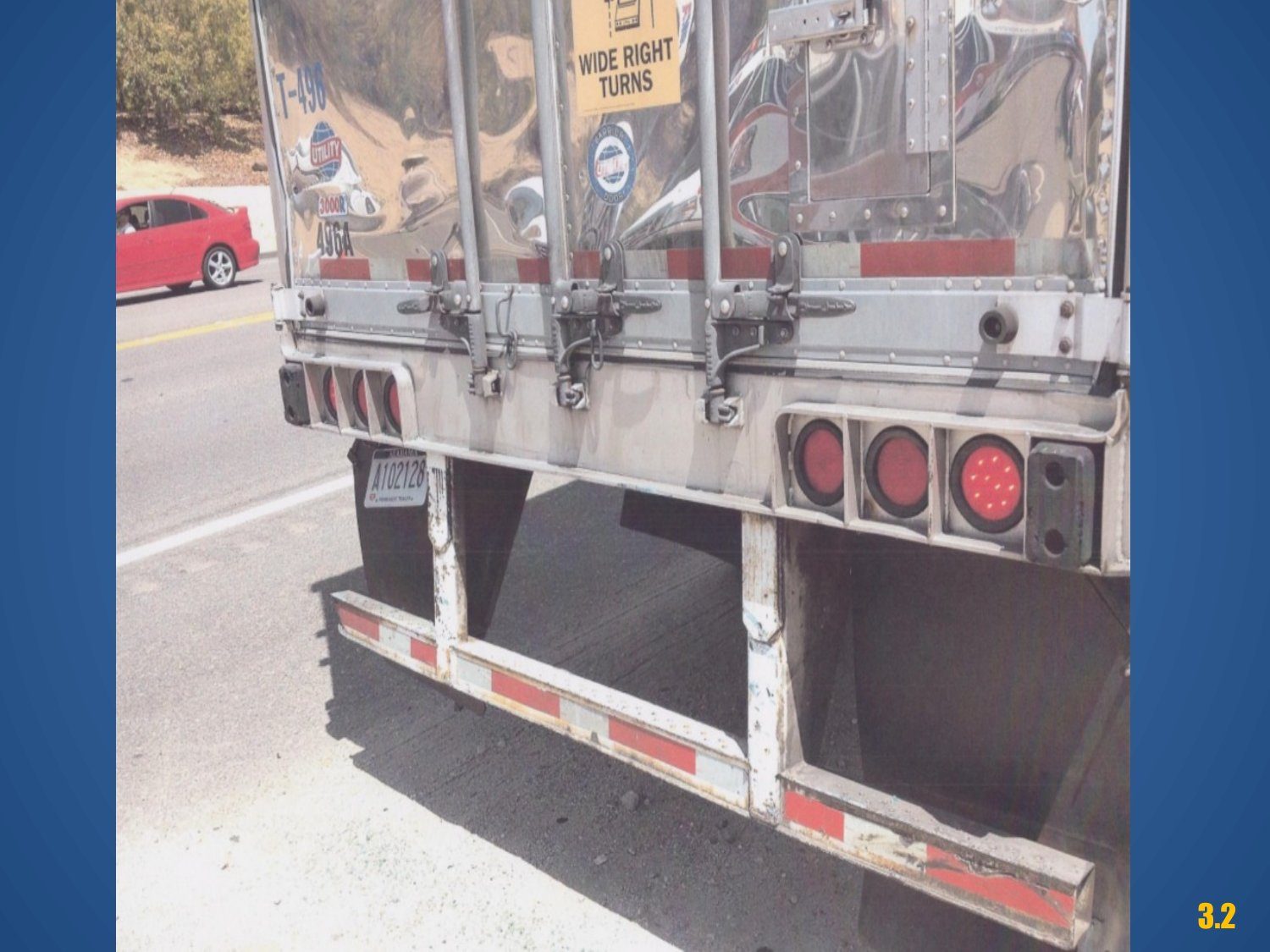
Night visibility truck parking California exhibit showing the rear of a parked trailer after a highway crash

The Regulatory Requirement for Warning Devices

Federal Motor Carrier Safety Regulations require that when a commercial vehicle is stopped on the traveled portion or the shoulder of a highway for any reason other than necessary traffic stops, the driver must place warning devices, typically reflective triangles, within a specified time and at specified distances from the vehicle, to warn approaching traffic of the hazard. California incorporates these federal standards for commercial vehicle operators. The purpose is straightforward: a large, stationary vehicle on or near a travel lane is a serious hazard, and approaching drivers need advance warning to react safely, particularly in conditions of reduced visibility.

Why the Failure to Deploy Warning Devices Is Powerful Evidence, Even in Daylight

It might seem that a truck parked in broad daylight does not need the same warning devices as one parked at night, since visibility is not an issue in the way it would be after dark. But the legal significance of a driver's failure to deploy warning triangles extends well beyond the practical visibility question. It goes directly to whether the driver treated the stop as an emergency at all. In the underlying litigation, involving a tractor-trailer parked on a highway shoulder in daylight hours, the driver's failure to deploy any warning triangles became a critical piece of circumstantial evidence undermining his claim that he was responding to a genuine mechanical emergency. A driver who genuinely believes a mechanical problem could escalate follows a specific protocol: pull over as safely as possible, check gauges, assess the severity of the problem, and deploy warning devices to protect both the stopped vehicle and approaching traffic. The complete absence of any of these steps, no smoke check, no gauge inspection, no emergency call, and no warning triangles, told the jury that this was not how a driver responds to a real emergency.

Warning Devices as an Independent Basis for Negligence

A separate duty of care

Even accepting that a stop was justified, a driver who fails to warn approaching traffic through required reflective devices breaches an independent duty of care, one specifically designed to prevent exactly the kind of collision that can occur when a vehicle unexpectedly encounters a stationary hazard.

Plead and prove both theories

Counsel should plead and prove both that the decision to park in the location was unreasonable given the absence of a genuine emergency, and that even if some justification existed, the failure to warn approaching traffic independently breached the standard of care and contributed to the crash.

Company training exposure

A trucking company that fails to train its drivers on this basic, federally mandated safety step exposes itself to an independent negligent training claim separate from the driver's individual conduct.

How Visibility Evidence Applied Here

Demonstrating the complete absence of warning devices, combined with a timeline showing a driver's delayed and inconsistent response to a claimed mechanical issue, was central to dismantling the defense's emergency narrative in the trial.

Theory pleaded
Jury finding
Warning triangles deployed
None, despite the federal requirement
Emergency response steps taken
No gauge check, no smoke check, no call for help
Effect on the emergency defense
Undercut the claim of a genuine mechanical emergency
Effect on comparative fault
Reduced advance warning for the approaching driver

Keep Reading

Related breakdowns from this case and our trucking practice.

Back to Case Studies

Referring a truck warning-device case?

We evaluate illegal truck parking and warning device referrals as counsel or co-counsel and pay statutory referral fees.

Refer a case

Frequently Asked Questions

What warning devices are commercial truck drivers required to use when stopped on a highway?

Federal regulations, incorporated into California commercial vehicle standards, require drivers to place reflective warning triangles at specified distances from a stopped vehicle within a set time period to warn approaching traffic of the hazard.

Does the failure to use warning triangles matter if a truck was parked during daylight hours?

Yes, even in daylight, the failure to deploy required warning devices is significant evidence of whether a driver treated a stop as a genuine emergency and can independently support a negligence claim regardless of ambient lighting conditions.

Can the absence of warning devices support a separate negligence claim?

Yes, even if a stop itself had some justification, failing to deploy required warning devices to protect approaching traffic can constitute an independent breach of the standard of care.

Skip to content