Establishing overview of the scene
Start with an establishing overview showing the intersection or roadway layout and the vehicles' relative positions before the incident, giving jurors a visual anchor they can return to throughout the case.

Motorcycle injury cases carry an inherent risk that jurors bring preconceived assumptions into the courtroom about riders, risk-taking, and personal responsibility. Effective jury education motorcycle safety California trial strategy has to address those assumptions directly, using demonstrative evidence and structured testimony that replaces intuition with fact before closing argument ever begins.
4
Sequenced demonstrative phases from overview to medical findings
3D
Collision reconstruction shown from the rider's perspective
40.1 years
Life expectancy translated into concrete, relatable terms
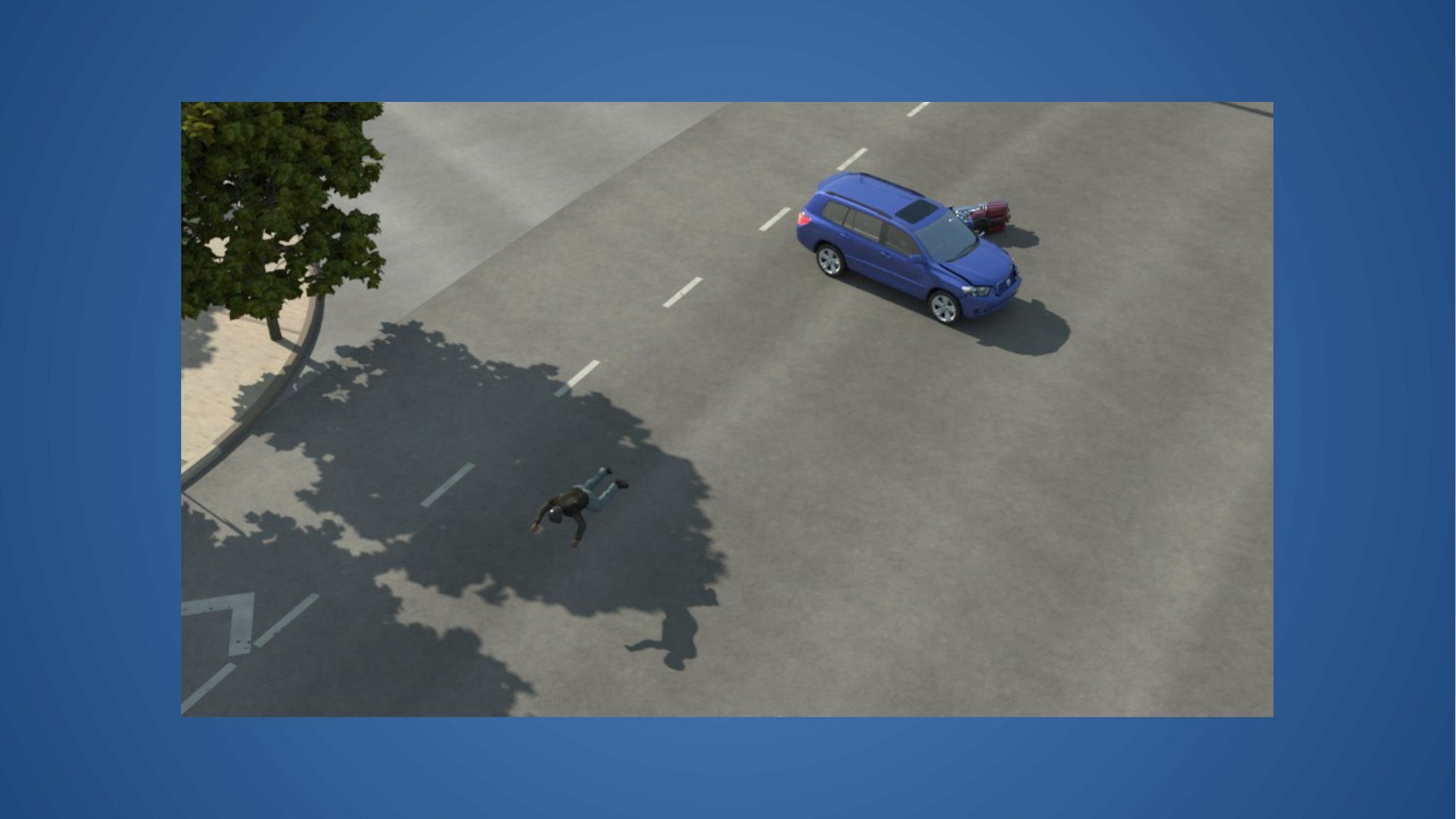
Jurors who have never ridden a motorcycle often underestimate how quickly a collision develops, how limited a rider's ability to avoid a sudden hazard actually is, and how differently a motorcyclist's body absorbs impact forces compared to an occupant inside a car. A jury education motorcycle safety California approach starts by acknowledging these gaps directly rather than assuming jurors will intuitively understand the physics and human factors at play. This is particularly important in cases involving comparative fault arguments tied to equipment choices, speed estimation, or lane position, where a juror's uninformed assumptions can silently inflate a perceived percentage of fault against the plaintiff before any expert ever takes the stand.
Jury education extends beyond liability into damages presentation, particularly for long-term injuries where jurors must grasp decades of future impact. Translating an abstract life expectancy figure into concrete, relatable terms, such as illustrating a remaining life expectancy through a specific number of birthdays, holidays, or other recurring life events the plaintiff will experience while living with the injury, helps jurors internalize the real scope of a damages period that might otherwise remain an abstract multiplier buried in an economist's spreadsheet. Numeric jellybean-jar or block-based visual metaphors, when used to represent something concrete like years of life lost or hours of daily care required, can also help jurors grasp large numbers, particularly when combined with expert testimony that grounds the visual in actual medical and actuarial data rather than presenting it as a bare rhetorical device.
Start with an establishing overview showing the intersection or roadway layout and the vehicles' relative positions before the incident, giving jurors a visual anchor they can return to throughout the case.
Move into a frame-by-frame reconstruction of the critical seconds leading to impact, presented early in the liability phase before testimony becomes bogged down in technical vocabulary.
Close with a biomechanics segment isolating the specific forces and body movement during impact, then a medical-findings segment connecting those forces directly to the plaintiff's diagnosed injuries.
The case behind this page used reconstruction, MRI-based medical evidence, and concrete life-expectancy visuals to help a jury grasp both the mechanism of injury and its lifelong consequences.
The case behind this page
The full story of how demonstrative evidence and expert testimony carried a $16.16 million verdict.
Read the full caseRelated doctrine
Why demonstrative contrast helps a jury reject an inflated helmet-fault percentage.
See the comparative fault breakdownRelated breakdowns from this case and our trial practice.

Helmet defense and comparative fault

Medical causation and brain injury proof

Comparative fault apportionment
We try demonstrative-heavy motorcycle and brain injury cases as counsel or co-counsel and pay statutory referral fees.
Refer a caseJurors without riding experience often underestimate how quickly motorcycle collisions develop and how differently a rider's body absorbs impact forces compared to a vehicle occupant, making deliberate education about these dynamics essential to a fair evaluation of fault and injury.
An effective sequence typically starts with an establishing overview of the roadway and vehicle positions, moves into a frame-by-frame reconstruction of the critical impact seconds, then transitions into biomechanics and medical findings that connect the crash mechanics to the plaintiff's specific injuries.
Yes. Side-by-side demonstrative comparisons, such as illustrating that a compliant helmet would not have prevented a specific injury mechanism, give jurors a direct visual basis for evaluating comparative fault arguments rather than relying solely on counsel's verbal assertions.