Slip Fall Premises California Johnson Facts and the Substantial Factor Doctrine

The slip fall premises California Johnson facts illustrate one of the most misunderstood doctrines in comparative fault litigation: the distinction between a finding of plaintiff negligence and a finding that the plaintiff's negligence actually caused the harm. Attorneys who fail to press this distinction at the verdict form stage risk allowing juries to conflate the two questions, resulting in an unwarranted reduction of their client's recovery.

430

CACI instruction defining a substantial factor in causing harm

2

Separate findings the defense must win to reduce a plaintiff's award

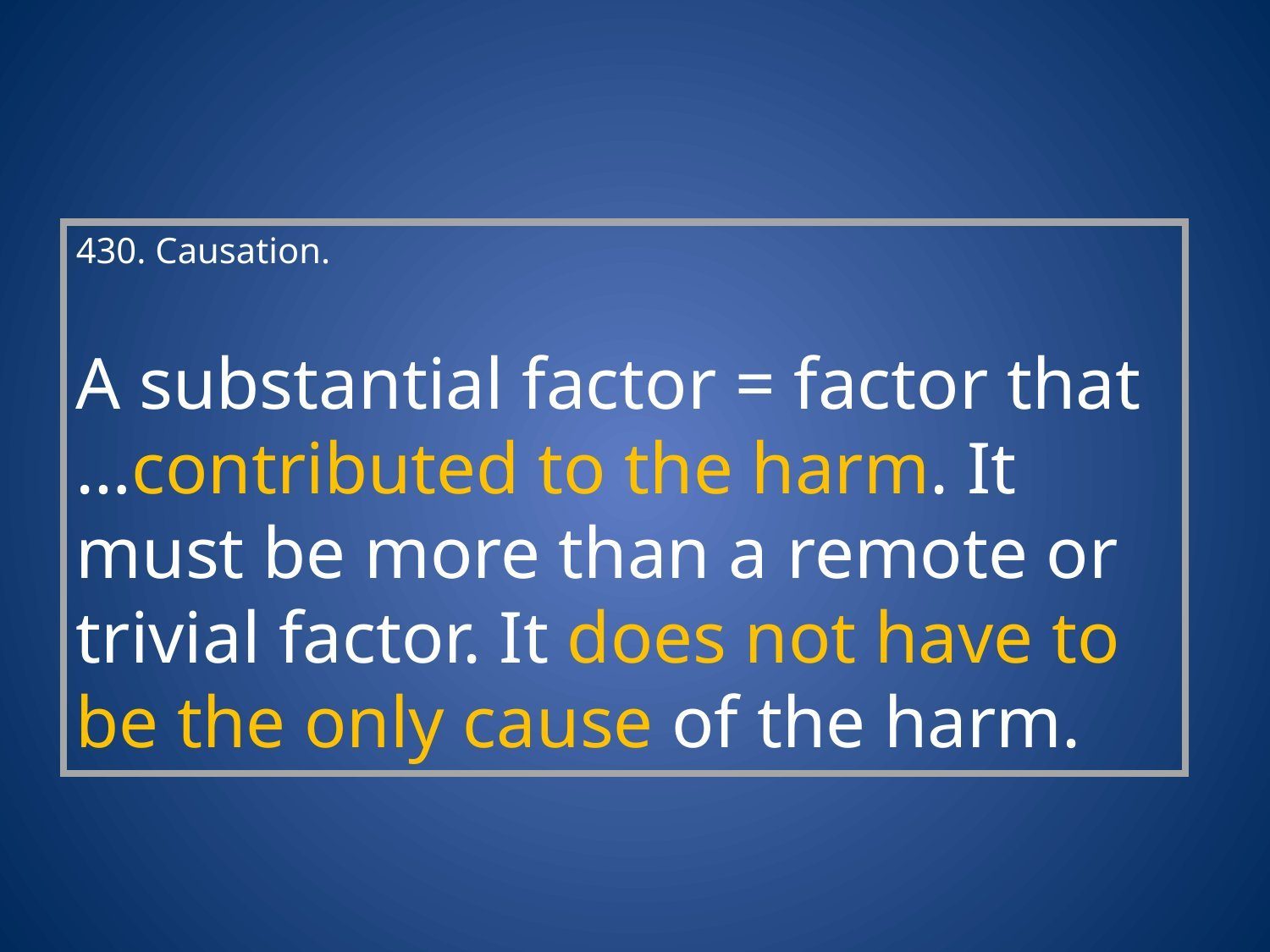
Slip fall premises California Johnson facts exhibit showing the substantial factor causation jury instruction

The Two-Part Test Defense Counsel Often Blur

California's comparative fault framework under Civil Code section 1431.2 and related case law requires more than a finding that a plaintiff acted carelessly. It requires the defense to separately prove that the plaintiff's carelessness was a substantial factor in causing the plaintiff's own injuries. CACI No. 430 defines a substantial factor as more than a remote or trivial cause, one that need not be the only cause of harm but must be a factor that actually contributed to it in a meaningful way. In litigation involving an elderly plaintiff who trips on a defective walkway, defense counsel will almost always argue that the plaintiff should have watched her step, which addresses only the first half of the two-part test and says nothing about whether greater attentiveness would have actually prevented the fall.

Structuring the Verdict Form to Preserve the Distinction

The verdict form itself is where this doctrine either protects a plaintiff's recovery or gets lost entirely. A properly structured special verdict form asks the jury first whether the plaintiff was negligent, and then, as a genuinely separate question, whether that negligence was a substantial factor in causing the plaintiff's harm. Counsel should insist on this two-question structure during jury instruction conferences, because a poorly drafted or combined verdict form risks inviting jurors to reflexively apply a fault percentage the moment they find any plaintiff carelessness, without ever separately confirming that the carelessness actually caused the injury.

Building the Causation Gap Through Physical Evidence

Documenting the defect itself

The severity and depth of a crack, the height differential it created, inadequate lighting conditions, and the absence of any warning signage or barrier all support an argument that the hazard would have caused a fall regardless of how attentively the plaintiff was walking.

Expert reaction-time testimony

A biomechanical or human factors expert can testify to reasonable pedestrian reaction times relative to a hazard of a given size and visibility, supporting the argument that the defect itself, not inattention, caused the fall.

Resisting premature settlement pressure

Insurance adjusters routinely use the mere suggestion of plaintiff carelessness to pressure early, reduced settlements. Counsel who can clearly articulate the substantial factor requirement are better positioned to preserve full damages for clients whose own conduct, even if imperfect, did not actually cause their injuries.

How the Two-Part Test Applied

The same analysis applies to any plaintiff a defense attempts to blame for their own injury, and it turns on two distinct questions rather than one.

Theory pleaded
Jury finding
First question
Was the plaintiff negligent?
Second question
Was that negligence a substantial factor in causing the harm?
Result when only the first is answered yes
No reduction of the plaintiff's recovery
Standard for substantial factor
More than a remote or trivial cause under CACI No. 430

Keep Reading

Related breakdowns from this case and our premises liability practice.

Back to Case Studies

Referring a comparative fault dispute?

We take premises and catastrophic injury cases where causation is contested as counsel or co-counsel and pay statutory referral fees.

Refer a case

Frequently Asked Questions

What is the substantial factor doctrine in California comparative fault law?

The substantial factor doctrine requires the defense to prove not only that a plaintiff was negligent but also that the plaintiff's negligence was a real, meaningful cause of their own injury, not merely a remote or trivial factor.

How should a verdict form be structured to preserve this distinction?

A properly drafted special verdict form should ask the negligence question and the substantial factor causation question as two genuinely separate items, preventing jurors from assuming causation automatically follows a finding of carelessness.

Does a finding of some plaintiff negligence always reduce a jury award?

No, under California law a finding of plaintiff negligence only reduces damages if the defense also separately proves that the negligence was a substantial factor in causing the plaintiff's injuries.

Skip to content