California Electrical Safety Premises Standards: What Property Owners Are Actually Required to Do

Overhead power lines running across commercial property are common, and their mere presence does not automatically create liability. What creates liability is a property owner's failure to take reasonable, foreseeable precautions once the line's proximity to ordinary human activity creates a substantial risk of contact. Understanding California electrical safety premises standards requires looking beyond the general duty of care to the specific clearance and safety requirements that govern how close ordinary activity can occur to overhead electrical lines.

1714

Civil Code section setting the general duty of care for property owners

GO 95

CPUC order setting overhead line clearance standards

California electrical safety premises exhibit showing an energized overhead line above a raised vendor flag

The General Duty of Care Under Civil Code Section 1714

California Civil Code section 1714 establishes the baseline duty of care applicable to property owners and occupiers: everyone is responsible for injury caused by their want of ordinary care or skill in the management of their property, except so far as the injured party has willfully or negligently brought the injury upon themselves. This general duty applies to commercial property owners who allow vendors, tenants, or invitees to conduct activities on their property, including activities that bring people and equipment into proximity with overhead electrical infrastructure.

Public Utilities Commission General Order 95 Clearance Standards

California's electrical utility infrastructure is subject to detailed clearance and safety requirements established under General Order 95, issued by the California Public Utilities Commission, which governs the construction, operation, and maintenance of overhead electric line facilities throughout the state. These standards establish minimum vertical clearance requirements for overhead lines above various types of ground use, recognizing that different activities occurring beneath a line create different levels of foreseeable risk. A line that meets minimum clearance for open, unused land may not meet an appropriate safety margin for land actively used for vendor stalls, equipment setup, or other activities involving tall objects being raised or moved.

Foreseeability and the Property Owner's Independent Duty

Foreseeability of contact

The central question is not simply whether the line met a generic minimum clearance, but whether the property owner should have reasonably foreseen that the specific activities on the property, given the line's actual height and the property's actual use, created a substantial risk of contact.

A duty separate from the utility's

Even where a utility installed and maintained a line in compliance with General Order 95, the property owner who controls how the land beneath the line is used keeps a separate duty to manage activities that account for the line's presence, and cannot point to the utility's compliance as a complete defense.

Absence of policy as evidence

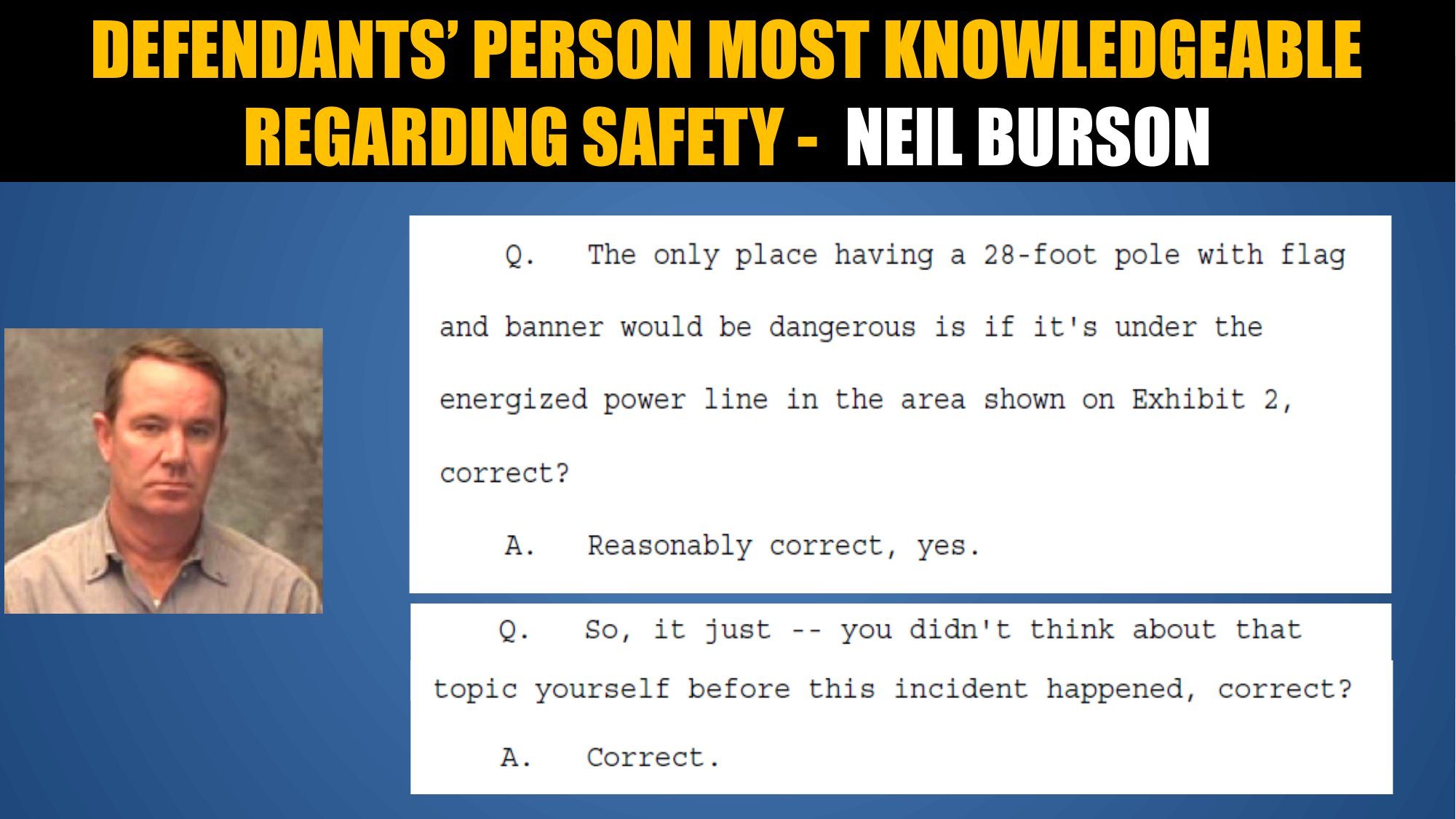
Where an owner never adopted any written policy on safe distances from overhead lines, never trained vendors, and never assessed which areas fell beneath a line, that absence of any safety framework is itself powerful evidence of a standard-of-care violation.

How These Standards Applied in the Case

In the underlying trial, the same standards framed how the jury evaluated the swap meet owners' conduct toward vendors working beneath an overhead line.

Theory pleaded
Jury finding
Line height above the vendor space
About 26 feet, within reach of a standard vendor flag pole
Written safety policy on pole height or clearance
None adopted anywhere on the property
Affected spaces versus total footprint
20 of roughly 800 vendor spaces sat beneath the line
Fault assigned to the property owners
77.5 percent

Keep Reading

Related breakdowns from this case and our premises liability practice.

Back to Case Studies

Referring an overhead line or premises hazard case?

We take electrical contact and premises liability cases as counsel or co-counsel and pay statutory referral fees.

Refer a case

Frequently Asked Questions

What is the general legal duty a property owner has regarding electrical hazards?

Under California Civil Code section 1714, property owners and occupiers have a general duty of ordinary care in the management of their property, which extends to reasonably foreseeable hazards created by activities they permit on the property, including proximity to overhead electrical lines.

Can a property owner be liable even if the utility company's line meets all applicable clearance standards?

Yes. A property owner's duty to manage foreseeable hazards on their property is independent of a utility company's own compliance obligations, meaning a property owner who allows activities that create a foreseeable risk of contact with an otherwise properly maintained line can still bear liability.

Why does the absence of a written safety policy matter in these cases?

An absence of any policy addressing pole height, equipment clearance, or overhead line hazards can itself serve as evidence that a property owner failed to take reasonable precautions against a foreseeable and preventable risk.

Skip to content