Electrocution Premises Liability Case: $12.25 Million After a Flag Pole Touched a Power Line

Our client watched her husband die in front of her. He was setting up their vendor stall at a swap meet in Fresno, lifting a 28-foot metal flag pole to mark their space, when the pole touched a power line running just 26 feet above the ground. He was electrocuted instantly. She suffered severe electrical burns from the same current standing beside him. A Fresno County jury returned a $12.25 million verdict in this electrocution premises liability case, holding the swap meet's owners responsible for a hazard that had been sitting in plain sight over their vendor spaces for years.

$12.25M

Fresno County jury verdict

77.5%

Fault the jury assigned to the swap meet owners

26 ft

Height of the power line above the vendor space

See our verdicts and settlements
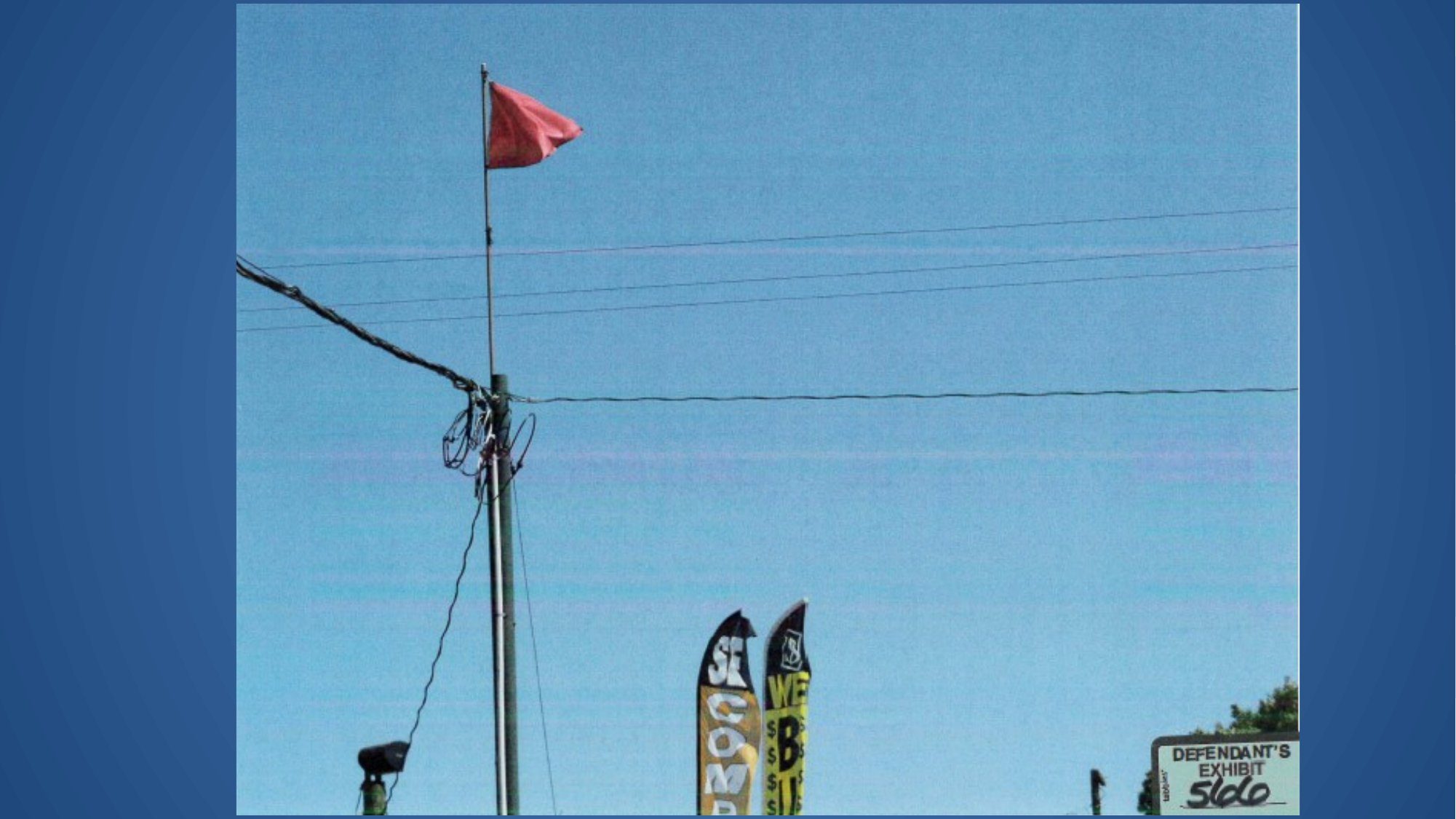
Electrocution premises liability case exhibit showing a vendor flag directly under an overhead power line at the swap meet
A litigation site diagram showed only 20 of the swap meet's roughly 800 vendor spaces sat beneath the power line, leaving 780 equally usable spaces elsewhere on the property.

What Happened

On August 24, 2013, our client and her husband were setting up their vendor space at the Cherry Avenue Auction swap meet in Fresno, a large outdoor market with hundreds of vendor stalls. As part of the ordinary process of marking their space, our client's husband lifted a 28-foot metal flag pole into position. The pole made contact with an overhead power line running just 26 feet above the ground, well within reach of a standard flag pole used routinely by vendors throughout the property. He was electrocuted and died at the scene. Our client, standing beside him, suffered severe electrical burns from the same current that killed her husband, and she witnessed his death directly in front of her. A site diagram developed during litigation showed that only 20 of the swap meet's roughly 800 total vendor spaces sat beneath this specific power line, meaning 780 alternative, equally usable spaces existed elsewhere on the property where no overhead line hazard existed at all. The swap meet's owners, two brothers who managed the property, had never adopted any written policy addressing vendor pole height restrictions near the power line, despite operating the market for years with the hazard present the entire time.

The Open and Obvious Defense

The swap meet owners argued that the overhead power line was an open and obvious hazard, a common premises liability defense suggesting the property owner had no duty to warn of a danger that should have been apparent to anyone using the property with reasonable care. We defeated this defense through depth-perception evidence establishing that accurately judging the height of an overhead line against open sky, without a reference point, is far more difficult than intuition suggests, particularly for someone focused on the routine task of setting up a vendor stall rather than specifically assessing overhead clearances.

How The Homampour Law Firm Proved the Hazard Was Foreseeable

The property owners conceded nothing on liability, so the case turned on showing the hazard was foreseeable and that the open and obvious argument did not hold.

Depth-perception evidence

A line silhouetted against open sky, without a nearby reference point of known height, is genuinely difficult for the human eye to measure. Vision evidence showed that a vendor could see the line and still misjudge how low it hung, especially while focused on raising a pole.

The defendants' own admissions

Two of the defense's own retained experts made admissions during testimony that undercut the open and obvious defense on its own terms. The swap meet's safety representative admitted at deposition that it had never occurred to him to check whether vendors were working beneath the line, and that the company had no written policy on pole height or clearance anywhere on the property.

The mid-trial photographs

During trial we obtained photographs showing the swap meet was still allowing vendors to use a 34-foot pole at the exact spot where our client's husband was killed, after his death. A property that kept exposing vendors to the identical hazard could not credibly call the danger unforeseeable or reasonable safety measures impractical.

The jury assigned 77.5 percent of the fault to the swap meet owners.

The Bystander Emotional Distress Claim

California law allows a bystander who directly witnesses the injury or death of a close family member, and who is themselves within the zone of danger, to recover for the resulting emotional distress. Our client's claim was unusually powerful because she satisfied every element of this doctrine in the most direct way possible: she was present, she witnessed her husband's electrocution and death in real time, and she suffered her own physical injury, severe burns, from the very same electrical current that killed him. This resulted in a substantial $6 million award recognizing the full weight of what she endured, separate from and in addition to the wrongful death damages recoverable on behalf of the family.

The Verdict

In September 2018, a Fresno County jury returned a $12.25 million verdict and allocated 77.5 percent of the fault to the swap meet owners, with 11.25 percent each to our client and her late husband under California's comparative negligence framework. The award covered $3.25 million in wrongful death damages for our client and the couple's children, $6 million for our client's bystander emotional distress from witnessing her husband's death while suffering her own burns, and $3 million for her direct-victim claim covering her physical burns and post-traumatic stress. The swap meet owners carried only $2 million in insurance coverage through United Fire Group. Prior results do not guarantee a similar outcome. The Homampour Law Firm handles premises liability and wrongful death cases on a contingency fee basis, advancing the costs of the case, so families pay nothing unless there is a recovery.

Theory pleaded
Jury finding
Total jury verdict
$12.25 million
Fault assigned to the swap meet owners
77.5 percent
Bystander emotional distress award
$6 million
Wrongful death and direct-victim damages
$3.25 million and $3 million

How This Case Was Built, Topic by Topic

The breakdowns below cover the property owner safety standards for overhead lines, defeating the open and obvious defense, how electrical codes set the standard of care, and selecting the electrical engineering expert.

Referring an electrocution or premises liability case?

We try catastrophic injury and wrongful death cases involving electrical and premises hazards as counsel or co-counsel and pay statutory referral fees.

Refer a case

Frequently Asked Questions

What happened in this electrocution premises liability case?

Our client's husband was electrocuted while lifting a 28-foot metal flag pole that touched an overhead power line just 26 feet above the ground at a swap meet in Fresno. He died at the scene. Our client, standing beside him, suffered severe electrical burns from the same current and witnessed his death. A Fresno County jury found the swap meet owners 77.5 percent at fault.

Why did the open and obvious defense fail in this case?

Depth-perception evidence showed that accurately judging the height of an overhead power line against open sky is genuinely difficult without a reference point, and the swap meet's own safety representative admitted in deposition that it had never occurred to him to check for vendors operating beneath the line, undercutting the argument that the hazard was obviously apparent to those using the property.

Can a wrongful death claim and a bystander emotional distress claim both be pursued in the same case?

Yes. Both claims can proceed together when a family member witnesses the death of a loved one and also suffers their own harm from the same incident, as our client did when she suffered burns from the same electrical current that killed her husband.

Skip to content